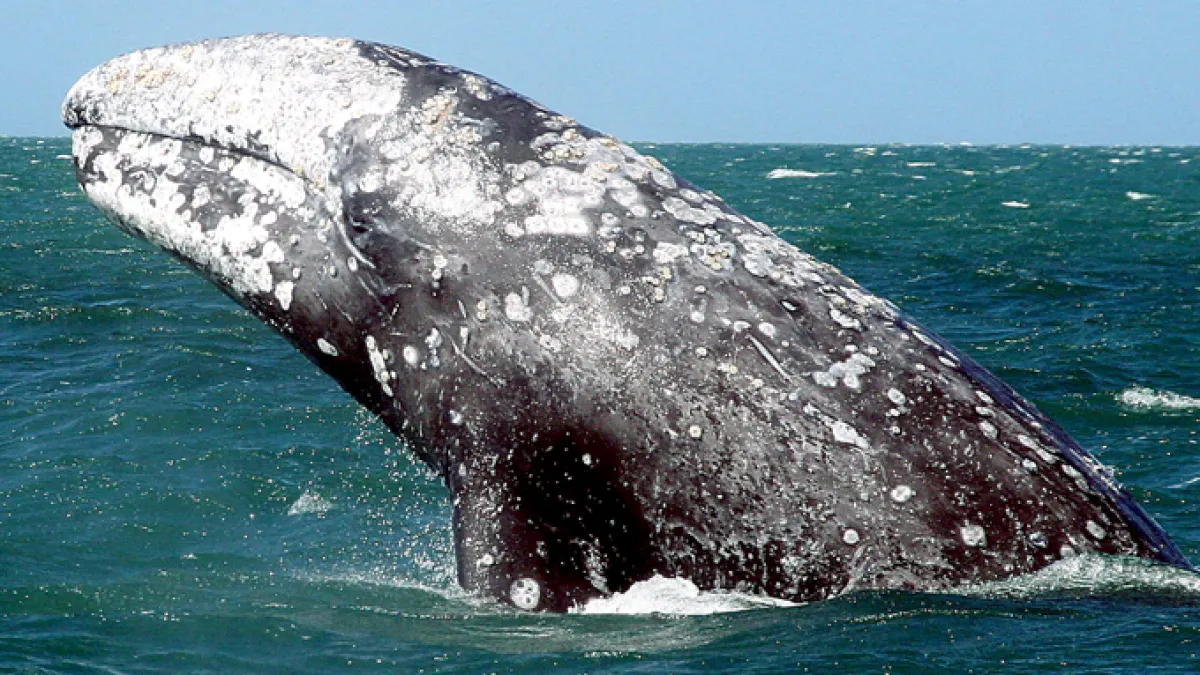
isess2013.org – The gray whale (Eschrichtius robustus) is one of the most remarkable marine mammals, known for its epic migrations, unique feeding behavior, and long history of interaction with humans. Found primarily in the North Pacific, gray whales travel incredible distances each year, moving between their feeding grounds in the Arctic and their breeding lagoons in Mexico. These hardy and resilient whales have survived near extinction and are now a symbol of marine conservation success.
Physical Characteristics
Gray whales are medium-sized baleen whales, typically measuring 40 to 50 feet in length and weighing between 30 and 40 tons. Their skin is a mottled gray, often covered in barnacles and parasites, giving them a rough, textured appearance. This unique coloration helps them blend into their environment and distinguishes them from other whale species.
One of the most distinctive features of gray whales is the lack of a dorsal fin. Instead, they have a series of small bumps, or “knuckles,” along their backs, which run down to their broad, paddle-shaped tail flukes. These whales also have a small, narrow head with arched upper jaws and short baleen plates, which they use to filter their food from the ocean floor.
Habitat and Range
Gray whales are found primarily in the North Pacific Ocean, with two main populations: the eastern North Pacific population, which migrates along the west coast of North America, and the western North Pacific population, found near Asia. The eastern population is much larger and more studied, while the western population is critically endangered.
These whales undertake one of the longest migrations of any mammal, traveling up to 12,000 miles round trip each year. In the summer, they feed in the nutrient-rich waters of the Arctic, particularly in the Bering and Chukchi Seas. In the winter, they migrate south to the warm, shallow lagoons of Baja California, Mexico, where they mate and give birth.
Feeding Behavior and Diet
Gray whales are unique among baleen whales in their feeding method. Rather than lunge feeding like many other large whales, gray whales are bottom feeders. They dive to the ocean floor, turn on their sides, and scoop up sediment from the seabed. Using their baleen plates, they filter out small crustaceans, amphipods, and other invertebrates, leaving the sediment behind.
This feeding technique leaves characteristic furrows on the ocean floor and sometimes results in whales being covered in mud when they surface. Their feeding behavior is highly specialized and adapted to the shallow coastal waters where they spend much of their time.
Gray whales feed heavily during the summer months in the Arctic, storing up fat reserves in the form of blubber that sustain them during their long migration to the breeding grounds, where they eat very little.
Social Behavior and Migration
Gray whales are generally solitary animals, though they can be seen traveling in small groups during migration or in larger gatherings at feeding or breeding grounds. Their annual migration is one of the most impressive in the animal kingdom. The journey from the Arctic to Baja California and back is not only one of the longest but also one of the most dangerous, as whales must navigate a variety of threats along the way.
Gray whales are known for their curiosity toward humans and boats, often approaching whale-watching vessels and interacting with people in Baja California’s lagoons. These “friendly whales” provide a unique opportunity for close human interaction, making them a favorite of ecotourists.
Reproduction and Lifespan
Gray whales have a relatively slow reproductive rate. Females give birth to a single calf approximately every two to three years after a gestation period of around 13 to 14 months. Calves are born in the warm lagoons of Baja California, where they remain with their mothers for several months before beginning the long journey north to the feeding grounds.
At birth, gray whale calves are about 15 feet long and weigh around 1,500 pounds. They are nursed for six to eight months, during which time they grow rapidly, gaining strength and blubber to survive the cold waters of the Arctic. Gray whales can live up to 60 to 70 years in the wild.
Conservation Status and Threats
Gray whales have had a turbulent history with humans. During the 19th and early 20th centuries, they were heavily hunted for their oil and baleen, driving their populations to the brink of extinction. Thanks to conservation efforts and the international ban on commercial whaling, gray whales have made a remarkable recovery, particularly in the eastern North Pacific, where their population is now considered stable.
However, the western North Pacific population remains critically endangered, with only a few hundred individuals left. Both populations face modern threats, including entanglement in fishing gear, ship strikes, and habitat degradation due to coastal development and climate change.
Climate change poses a significant challenge for gray whales, as warming oceans and shrinking ice cover in the Arctic affect the availability of their prey. As sea ice retreats and ocean ecosystems change, gray whales may need to adapt their migration patterns and feeding habits to survive.
Cultural Significance and Ecotourism
Gray whales have long held cultural significance for indigenous peoples of the Pacific coast, who historically hunted them for food and materials. Today, gray whales are celebrated as symbols of conservation and resilience. In Mexico’s Baja California, where gray whales migrate each winter, they have become a central part of ecotourism. Whale-watching tours allow visitors to experience the awe-inspiring migration and interact with these gentle giants in a respectful and sustainable way.
Conclusion
The gray whale is an ancient traveler of the seas, known for its incredible migration, unique feeding behavior, and resilience in the face of human exploitation. As one of the most well-known whale species, gray whales inspire wonder and respect in those who encounter them. Thanks to ongoing conservation efforts, these majestic creatures continue to thrive in the eastern North Pacific, though they face new challenges from climate change and human activities. Protecting gray whales and their habitats is crucial to ensuring their survival for generations to come.