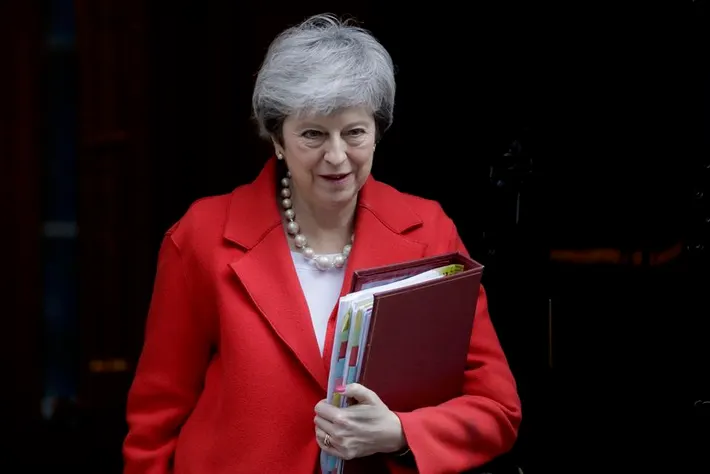
isess2013.org – Theresa May, born on October 1, 1956, in Eastbourne, England, is a British politician who served as the Prime Minister of the United Kingdom from 2016 to 2019. As the second woman to hold the position of Prime Minister after Margaret Thatcher, May’s leadership was defined by her steady, cautious approach and the extraordinary challenges she faced, particularly in handling the Brexit crisis. Her premiership, though marked by political upheaval, demonstrated her resilience and commitment to her role as the leader of the nation during a turbulent period.
Early Life and Education: Foundations of Leadership
May was raised in a middle-class family, the daughter of a vicar, and attended the prestigious St. Hugh’s College, Oxford, where she studied Geography. Her upbringing and education gave her a strong sense of discipline and responsibility, qualities that would serve her well in her later career. After Oxford, she worked in the banking sector before entering politics in the early 1980s, when she became involved in her local Conservative Party activities.
Her early political experience included serving as a councillor for the London Borough of Merton and as a member of the Conservative Research Department. May’s first taste of national politics came in 1997 when she was elected as the Member of Parliament (MP) for Maidenhead, a position she would hold for over two decades.
Climbing the Political Ladder: Rising Through the Ranks
Theresa May’s ascent within the Conservative Party was steady and consistent. She served in various shadow cabinet positions, and in 2010, after the Conservative Party’s victory in the general election, May was appointed as Home Secretary under Prime Minister David Cameron. In this role, she was responsible for overseeing immigration, law and order, and national security, areas where she made her mark with a firm stance on reducing immigration and implementing tougher security measures.
As Home Secretary, May became known for her uncompromising approach to immigration and for her role in introducing significant reforms to the police and security services. Her tenure was often controversial, particularly regarding her policies on immigration and her handling of the UK’s security response to terrorism.
Becoming Prime Minister: The Brexit Crisis and Political Uncertainty
In July 2016, following the resignation of Prime Minister David Cameron after the Brexit referendum vote, Theresa May emerged as the leader of the Conservative Party. She was elected unopposed and took office at a time of national crisis. The referendum had revealed a deeply divided country, with 51.9% of voters opting to leave the European Union, and May was tasked with leading the UK through the complex and contentious process of Brexit.
May’s initial approach to Brexit was to pursue a strategy of negotiation with the European Union to secure the best possible deal for the UK. Her position was clear: the UK would leave the EU, but it would also aim to maintain close ties with the European market and secure a smooth transition. She famously declared that “Brexit means Brexit,” signaling her commitment to delivering on the referendum result, but this often left her critics questioning the specifics of her plan.
Brexit Negotiations and Challenges
May’s time as Prime Minister was dominated by the Brexit negotiations, and she quickly encountered resistance both within her own party and from the opposition. The key sticking point was the issue of the Irish backstop, which aimed to prevent a hard border between Northern Ireland and the Republic of Ireland. The deal that May negotiated with the EU, known as the “Withdrawal Agreement,” was rejected multiple times by Parliament, leading to a protracted period of uncertainty and deadlock.
In 2017, May called a snap general election in an attempt to strengthen her position and secure a mandate for her Brexit plan. However, the election proved disastrous for the Conservative Party, resulting in a hung parliament and forcing May to rely on the Democratic Unionist Party (DUP) for support. This outcome weakened her position further and made it more difficult for her to push through her Brexit deal.
Despite her best efforts, May struggled to unite her party and the nation on the issue of Brexit. Her leadership was constantly challenged by those on the hard right of her party, who felt that she was too soft on Brexit, as well as by those who wanted to remain in the European Union. After three years of failed negotiations and repeated parliamentary defeats, it became clear that May’s approach was not going to deliver a resolution.
Resignation and Legacy
In May 2019, facing intense pressure from her party and the public, Theresa May announced her resignation as Prime Minister. Her leadership had become increasingly untenable as her failure to deliver Brexit resulted in widespread frustration. She stepped down, but not without leaving a legacy of perseverance in the face of intense political pressure.
May’s resignation marked the end of one of the most challenging premierships in modern British history. Her tenure, though often seen as a failure in terms of delivering Brexit, demonstrated her resilience and commitment to public service. May remained a figure of respect within her party, known for her personal integrity and her dedication to serving the national interest.
Conclusion: A Legacy Shaped by Brexit
Theresa May’s premiership will forever be associated with the Brexit process, a task that proved to be more difficult and divisive than anyone had anticipated. While her tenure was marked by political setbacks and frustrations, her determination to uphold the result of the 2016 referendum and her attempts to find a compromise deal with the European Union earned her respect from some quarters, even as she faced intense criticism from others.
May’s leadership style, often characterized as cautious and pragmatic, was both a strength and a weakness during the Brexit negotiations. She was unwilling to embrace the more radical approaches advocated by some within her party, but this unwillingness to take risks ultimately contributed to her downfall.
In the years since her resignation, Theresa May has continued to play an active role in British politics, offering her insights on a range of issues, from domestic policy to global diplomacy. Though her legacy will always be intertwined with the Brexit process, her long-standing commitment to public service and her perseverance in the face of political adversity remain key aspects of her career.